Can we really fight deportations one at a time?

In the last month we’ve seen a lot of exciting news on the political front regarding support for undocumented immigrants. Undocumented Dream Activists Jonathan Perez and Isaac Barrera turned themselves in at a Border Patrol office on November 10th in an effort to draw attention to conflicting policies in the Immigration and Customs Enforcement agency—ICE is not following internal policy to prioritize resources by only detaining and deporting serious criminals.

A little over a week later, on November 21, actions by the Alabama Coalition for Immigrant Justice (ACIJ, One Family One Alabama Rally) brought together a number of elected officials from the states of California, Illinois, New York, Texas, and Arizona to hear from Alabaman elected officials, law enforcement and community members about how the draconian HB56 is undermining the economy, security, and collective spirit of goodwill and justice in their state.

Countless journalists and media outlets are cropping up increasing the amount of in-depth, well-balanced coverage that the subject deserves (see our blogroll) This is positive press, and a step in the right direction as far as I’m concerned. More and more people are questioning the increasingly intolerant environment that hardworking undocumented immigrants encounter in the U.S.  It’s more heartening than President Obama’s relative silence on the matter of being the one President who’s deported the most individuals (and his term isn’t even up). A perception of outrage and action is far better than the depressing panorama revealed by the competing Republican candidates for the 2012 elections with regard to immigration policy.

But there is one immigration and the media-related phenomenon that I feel like I ought to view as positive but that in reality I view as somewhat concerning. It is the amount of petition signing requests I’ve received regarding individuals on the brink of deportation in the last several months. Don’t get me wrong—ever since I became an environmental activist at 15, I learned the power of petitions for enacting change. And ever since I got Internet at my house where I live in exile with my husband (a former undocumented immigrant in Mexico), I dutifully sign on to these sites and sign the petitions. I don’t normally “state a reason” for signing the petition, but if I were to, I’d say something like, “Read the inscription on the Statue of Liberty” or “because this student wants to contribute to American society, and we need more people like him/her.” Then I think to myself, I hope they have better luck than we did, and go on with my day’s business. Some of them do, happily, end in victory.

It’s not that I’m not against getting signatures on petitions per se—the problem I see is that the cases aren’t letting up, much less ever ending. Today I read a tweet that we need to get someone home with their fiancee by Christmas. I think to myself, yes, we do, but how many other thousands of individuals besides this one person would also like to be home for the holidays with their loved ones? Last week I read an article by Valeria Fernandez about a woman from Michoacan whose husband is American and whose run of luck in the U.S. may be about to come to an end. She has all the same potential tragedy if she had to go back to Mexico as any of the petition requests I’ve received; she would be separated from her family, her business would be ruined, etc. But a quick search on change.org revealed no hits for Maria Teresa Fuentes. As I read the article, her story sounded more and more eerily like my husband’s previous situation, and the sense of helplessness we had when facing our final decision to take destiny into our own hands and move to Mexico. Her husband’s comment: “I just want to go to Washington D.C. (to) meet with someone there and see what we can do to help my wife,” he said. “This gives me so much grief. Someone has to listen.”

But every time I receive a petition benefiting a single person’s case, I can’t help but wonder if trying to win immigration reform case by case is the most strategic direction for the movement to go in. Even though I’m experiencing the direct effects of displacement by deportation, I have yet to feel fully entitled to make my strategy criticisms public, since I’m “only a spouse” and “not an expert” (hopefully I’ll get over that issue). But I ask anyways: what would happen if we combined all the energy spent on individual cases and petitions and used it to lobby for comprehensive immigration reform on Capitol Hill that we can rely on, that’s truly fair and just, and/or, in the case of ICE, agency-wide policy follow-through?

More than most people I know, I want to see undocumented students be able to complete their educations and go on to be successful professionals as legal U.S. residents. I want immigrant spouses to be able to stay with their American families on U.S. soil (or wherever they choose) without having to go through stressful forced relocations the way we’ve had to (or worse). But I am concerned about the current nature of the discourse and political action regarding immigration reform.

My most idealistic expectation is that we shouldn’t need to start a petition, or find a representative in Washington for every single case. More than just victorious immigration cases that boil down to luck or influence, opportunities are needed for people who don’t have access to sites like change.org but who still deserve a shot at legalization. I worry that today’s “good feeling” of one victorious petition campaign, despite making a positive but tiny dent, distracts us from the overall panorama—that millions of individuals are living in an undeserved underground due to a long detour in how our country values its immigrants of all skill levels and skin colors. We need to acknowledge the importance of all immigrants to American society, not just the wealthy, well-educated, or papered ones, and work to eliminate the knee-jerk biases that come with incomplete understandings of the system.

There is a lot of history to this movement that I’m not privy to, despite the fact that I’ve read and experienced much more about it than most of my friends and family. There have been all sorts of failed attempts at reform and even worse laws passed that have made things worse for immigrants and polarized the situation further. It’s a dog-eat-dog world, the U.S. immigration scene, the kind that pits descendants of undocumented immigrants against their brethren who don’t have the benefit of laxer laws or amnesty. It’s the kind of situation  that leaves activists with no choice but to split into factions and seek their best chances in Congress. Dream Activists may be uniquely suited for organizing around this issue, as students in a closer-knit collegiate setting. And it’s harder to argue with the idea that young children and students who arrived in the U.S. undocumented by no choice of their own ought to be extended the same rights as legal residents, vs. getting behind adults who, despite not having had “a line to wait in,” made an adult decision to seek economic refuge via illegal entry.

Perhaps that’s where the problem arises: the inherent lack of unity among the individuals affected by these policies (I’d argue, all of us).  It’s a difficult matter to speak frankly about, even in families with affected individuals. But it’s a matter we must address if we are to make any substantial headway in terms of comprehensive immigration reform.

And when it comes to activism that targets positive change in the lives of immigrants, I would hope that in addition to campaigns won by the individuals who manage to pull off major online mobilization or gain personal favor in Washington, public backlash will grow and coalesce against policies that unfairly target ALL individuals, students and adults alike, who frankly, the U.S. economy and many American families depend on.

Testing Alabama’s and ICE’s deportation process

Isaac Perez and Jonathan Berrera are currently in immigration detention in Louisiana

[quote]”Hey, what’s going on, Boss?”[/quote]

The cell phone video below shows two young activists going into a Border Patrol office in Mobile, Alabama and basically turning themselves in. Their names are Jonathan Perez and Isaac Barrera. They turned themselves in to the Border Patrol on Nov. 10 in order to test the Obama Administration’s use of prosecutorial discretion in pursuing deportations.

[quote]”What’s it to ya?”

“I’m undocumented too.”[/quote]

“We want to reveal the truth and show [Immigration and Customs Enforcement] for what they really are, as a rogue agency which has no accountability while they separate families,” Perez, a 24-year-old activist from Los Angeles, told Colorlines.com after being detained and sent to the South Louisiana Correctional Center in Basile. Perez and Barrera are interviewing other detainees and collecting other deportation stories from inside .

The action was supported by Dream Activist, a national network of grassroots groups that support passage of the Dream Act and The National Immigrant Youth Alliance. According to the Colorlines story, Perez and Barrera have been issued deportation orders, but an ICE spokesperson told Cololines that the agency has not issued detainers against them. Either way, they are still being detained and activists are trying to pressure the agency to release them before Thanksgiving.

By organizing around specific cases, mostly through online petitions and flooding ICE offices with phone calls, immigrant youth activists have managed to prevent many deportations of low priority, low risk immigrants such as Perez and Barrera—Dream Act eligible youth, people with family ties in the United States or long term residents without criminal records. These are the people that Obama has pledged and ICE has been directed not to deport.

Still, the vast majority of people being deported do not have criminal records: From October 2010 through July 2011, 81.2 percent of people ordered removed from the country had only violated immigration rules—illegal entry, overstaying visas or other administrative violations, according to the Transactional Records Access Clearinghouse at Syracuse University. That is 152,488 people. None of them had committed any other crimes.

Perez and Barrera have not gotten any press aside from the Colorlines report, as far as I can tell. But their action, along with a sit-in at the Alabama Statehouse last week and a rally at the historic 16th Street Baptist Church last night, the same church where four young black girls were killed in 1963 when white supremacists set off a bomb, is a powerful symbolic act in this time of renewed protest spirit in the United States. Risking arrest and, now, deportation, has a long history in this country of successfully demonstrating injustices to the public. The media needs to pay more attention to it.

[fblike style=”standard” showfaces=”true” verb=”recommend” font=”arial”]

On persecution, human rights and immigration

Eleanor Roosevelt examines the Declaración Universal de Derechos del Hombre

This morning I was looking at the Universal Declaration of Human Rights, trying to find relevant sections for the final chapter of Amor and Exile (I’m taking stabs at the chapters out of order now … though we are getting close to finishing the manuscript). I was a bit disappointed that migration was not considered more of a human right, though the right to seek “asylum from persecution” is protected:

Article 14.

  • (1) Everyone has the right to seek and to enjoy in other countries asylum from persecution.
  • (2) This right may not be invoked in the case of prosecutions genuinely arising from non-political crimes or from acts contrary to the purposes and principles of the United Nations.

I tweeted: The Universal Declaration of Human Rights is weak on rights to movement between nations …. bummer bit.ly/vds3th.

The Universal Declaration of Human Rights displayed in Mauritius / duncan on flickr

And then I drafted this sentence: “When taken in the context of other universal human rights—the right to a livelihood, to security and to family—’persecution’ can include a host of justifications for seeking out life in the United States.”

I’m not sure I’m legally right about that, but I figured I’d check it out this week.

Then, tonight, via @redhotdesi I discovered, The @asylumist and his recent post on persecution, citing an article by law professor Scott Rempell:

Persecution is the core concept of asylum and refugee protection. Although thousands (if not tens of thousands) of decisions hinge on its meaning, a consistent definition is yet to emerge. Unmoored to any unified understanding of the term, immigration agencies and federal courts of appeals continue to articulate many different conceptions of persecution – conceptions that lack internal consistency and a coherent analytical foundation. Moreover, legal scholars have not attempted to aid adjudicators’ understanding of persecution because, by and large, scholars do not believe that a unified definition is possible. Meanwhile, the divergent definitions and understandings of persecution continue to produce unfair results for those seeking asylum, as asylum applicants receive disparate outcomes despite presenting claims based on similar situations. This Article challenges the conventional wisdom that persecution defies unified meaning. It provides a comprehensive assessment of persecution’s central underpinnings to isolate the three pillars that represent persecution’s fundamental core: harm, severity, and legitimacy. At the same time, this Article critiques a number of false dichotomies and shaky definitions that have troubled and obscured the persecution definition up to this point. Based on the analyzed core aspects of persecution and the elimination of erroneously included definitional components, this Article proposes that decision-makers define persecution as “the illegitimate infliction of sufficiently severe harm.” Because it is grounded in an examination of persecution’s true underpinnings, the proposed definition will aid courts in their review of asylum claims, and help administrators render consistent decisions. The stakes are simply too high, and the issue too prevalent, to let decades of abdication continue in any effort to form a unified definition.

Mostly I share this for its awesome serendipity. I am not a lawyer and I have not read the entire law review article yet. But I have a hunch that my definition of persecution is overly simplistic, optimistic and probably serves to detract from truly life threatening asylum cases as opposed to merely lifestyle or quality of life or life plan threatening immigration cases, though that line can be difficult to draw. But I do think that a case can and should be made for a universal right to migrate. Perhaps the United Nations is not the body to make such a case, but the United States certainly could try harder.

George W. Bush on a path to citizenship for undocumented spouses

The remarkable thing about this 2001 letter from former President George W. Bush to Congress, is the numbers: 500,000 undocumented immigrants eligible for green cards with their U.S. citizen or permanent resident relatives, a majority of whom are spouses and 200,000 who missed the deadline because of Congressional inaction. That was 10 years ago:

The White House,
Washington, May 1, 2001
Hon. J. Dennis Hastert,
Speaker of the House of Representatives,
Washington, DC.

Dear Mr. Speaker: I am a strong proponent of government
policies that recognize the importance of families and that
help to strengthen them. To the extent possible, I believe that
our immigration policies should reflect that philosophy. That
is why I support legislation to extend the window created under
section 245(i) of the Immigration and Nationality Act during
which qualified immigrants may obtain legal residence in the
United States without being forced to first leave the country
and their families for several years.

According to agency estimates, there are more than 500,000
undocumented immigrants in the country who are eligible to
become legal permanent residents, primarily because of their
family relationship with a citizen or legal permanent resident.
However, the law generally requires them to go back to their
home country to obtain a visa, and once they do so, they are
barred from returning to the United States for up to 10 years.
Many choose to risk remaining here illegally rather than to be
separated from their families for those many years. This issue
has been the subject of discussion in the Working Group that
Attorney General Ashcroft and Secretary of State Powell co-
chair with officials of the Mexican government, and should be
addressed to ensure a more orderly, legal, and humane migration
flow between our countries.

I encourage the Congress to consider whether there was
adequate time for persons eligible under section 245(i) to
apply for adjustment of status before the filing deadline
expired yesterday. Information indicates an estimated 200,000
were eligible to file but did not meet the deadline.
Preliminary reports suggest that many applicants were unable to
complete their paperwork in time, due in part to the fact that
the rules explaining how the provision would be applied were
not issued until late March. It remains in our national
interest to legitimize those resident immigrants, eligible for
legal status, and to welcome them as full participants of our
society. But we will only be able to do this if the path to
legalization encourages family reunification. For this reason,
I would support legislation that temporarily extends the
recently expired April 30, 2001, filing deadline, while
maintaining the requirement that the applicant was physically
present in the United States on December 21, 2000.

I look forward to working with you on this important
legislation.

Sincerely,
George Bush

Also remarkable: the civil language on strengthening the family, the use of “undocumented” rather than “illegal” and the assertion that undocumented husbands, wives, parents and children, are actually eligible for visas, not merely “deportable aliens.”

Did I mention that was (only) 10 years ago?

Days of impending reunions

We had 24 hours of intense conversation and experience of family separation and impending reunion, in several formats this weekend.

Friday night, my wife and I went to see One Way: A Tuareg Journey, a very thoughtful documentary about a Tuareg family from Niger that immigrates to Northern Italy, where the father works at an electronics assembly plant. The father left first, in the hopes of earning some money for his family. A year or two later, he sent for his wife and two older children, who quickly adapt to life in Italy, thriving in Italian and soaking up knowledge and culture.

For about three years, the family is separated from the youngest son, who did not have a birth certificate or some other identity document and was not able to join the family in Italy. (In a particularly compelling scene, the boy takes a piece of scrap paper and fills it with geometric shapes, calling it his papers.) Filmmaker Fabio Caramaschi captured the intense reunion of father and young son in the desert, when the softening, westernizing father returns to collect his Tuareg son, who was left with grandpa to work the camel train and survive in the harsh Saharan climate. The son, al-Kassoum, is a brilliant 6-year-old upon his arrival in Italy, and is able to reflect on the stark cultural differences and opine that he’d rather return to Niger, to the desert.

On Saturday, we went to a birthday party for 1-year-old Sara, whose parents, Veronica and Juan, will appear in Amor and Exile. Sara has never met her father because he is in Mexico and barred from returning to the United States for a long time. Juan called from Mexico while we were at the house and spent a long time on the phone with his brother, his nieces and singing Happy Birthday to his baby. While he was emotional about missing the pink cake and kid games (as was I), Juan and Veronica are planning to reunite in Mexico before year’s end and their excitement was palpable.

Then we rushed home to meet another friend, a man from the Congo who had a kind of life changing experience this past week that is nearly unimaginable to me. I am just going to give the rough outlines here, because I think he is going to be telling his own story soon, but on Friday, Benjamin located his wife and two daughters in Kampala, Uganda after 14 years of searching. They spoke on the phone—well hardly spoke, they mostly cried on the phone, both in a state of shock. Benjamin lived in a refugee camp in Zambia after fleeing the Congo in 1997 and recently resettled in Boise. He had spoken to my wife, who works for a refugee organization here, about being unsure when to admit that he would never see his family again. And then, all of a sudden, some newly resettled Congolese refugees in Ohio got to talking and connected the dots between Benjamin in Idaho and his wife and kids in Uganda and all of a sudden they were on the phone, talking to one another again. Now he is trying to figure out how to meet them, again.

These disparate, yet related stories of family separation—whether through government policy, economics, war or some combination of the three—are all connected in my mind. And they serve as a reminder that the conservative talking point of “Family Values” is perhaps a good starting point, or re-starting point, for a national discussion on migration policy. The stories I have been reporting for the past year and a half all make that point and my discussions this weekend make the same point on a global scale: in a world of globalized culture and markets, the family is still a basic unit that requires some basic protections.

While brushing my 6-year-old’s teeth last night I was careful to avoid the two, extremely loose front chompers. She asked me if kids in the Congo lose their teeth because Benjamin had been quite impressed with the way she pushed them out with her tongue. I choked up a bit explaining that he missed his own daughters’ tooth-losing period. But I am confident that he will soon find a way to reunite with his now-teenage daughters and that Juan will soon get to meet his baby and that Sidi’s family’s one-way trip will not rob them of the essential wisdom of the desert.

Americans, family members caught in Secure Communities dragnet

The airing of the PBS Frontline documentary Lost in Detention last week is part of a growing awareness across the country of the gravity of the Bush-Obama immigrant detention dragnet.

White House immigration advisor Cecilia Muñoz

I thought the film itself lacked focus and was dramatized in an unfortunate, made-for-television way. But the accompanying website, linked above is very useful and contains full text of the interviews that were obviously cut into sound bytes for the film, like this one of Obama Administration director of intergovernmental affairs and immigration advisor Cecilia Muñoz:

Frontline: Does President Obama believe that his aggressive policy in immigration and enforcement has been successful?

Cecilia Muñoz: The president has said a number of times, he swore an oath to uphold the law. It’s our responsibility to enforce the laws that we’ve got. Congress gives us resources to enforce the laws that we’ve got. But how we do it matters a lot. He’s talked about that as well.

And later in the interview, Muñoz picks up this same idea.

Muñoz: But at the end of the day, when you have immigration law that’s broken and you have a community of 10 million, 11 million people living and working in the United States illegally, some of these things are going to happen. Even if the law is executed with perfection, there will be parents separated from their children.

They don’t have to like it, but it is a result of having a broken system of laws. And the answer to that problem is reforming the law, making sure that we have an immigration system that works here. You can’t fix the heartbreaking things that happen as a result of immigration enforcement just through enforcement policy. You have to fix that by reforming the law, and that requires the Congress to act, which is why the president has been pushing them so hard.

It’s the same line that unnamed ICE officials have taken on a recent report from the UC-Berkeley Law School condemning Secure Communities for, among other things, possibly arresting some 3,600 American citizens.

ICE officials called the report “misleading and inaccurate,” saying Secure Communities has enhanced public safety and that the report failed to acknowledge ICE’s responsibility to determine who is in the country illegally.

“If there is a question about an individual’s status, ICE conducts appropriate follow-up. If the individual is a U.S. citizen, ICE takes no additional action. In exercising its civil immigration functions, ICE does not detain U.S. citizens,” the agency said in a statement released in response to the report.—Identical quote at San Jose Mercury News and Salon.com

The report in question expands on an American Immigration Lawyers’ Association survey that we wrote about in August. The University of California—Berkeley Warren Institute on Law and Social Policy completed a study of Secure Communities [full report .pdf]. Among the findings:

  • Approximately 3,600 United States citizens have been arrested by ICE through the Secure Communities program
  • More than one-third (39%) of individuals arrested through Secure Communities report that they have a U.S. citizen spouse (5%) or child (37%), meaning that approximately 88,000 families with U.S. citizen members have been impacted by Secure Communities
  • Latinos comprise 93% of individuals arrested through Secure Communities though they only comprise 77% of the undocumented population in the United States

Let me repeat that: based on extrapolations of a smaller data set that the law school obtained through the settlement of a lawsuit between ICE and the National Day Labor Organizing Network, 3,600 U.S. citizens may have been held by ICE since October 2008 and some 88,000 families with U.S. citizen members have been affected by Secure Communities.

“Overall, the findings point to a system in which individuals are pushed through rapidly, without appropriate checks or opportunities to challenge their detention and/or deportation. This conclusion is particularly concerning given that the findings also reveal that people are being apprehended who should never have been placed in immigration custody, and that certain groups are over-represented in our sample population.” —Warren Report

The most chilling line in the report, for me, is that the family connections of detainees to U.S. citizens are likely underestimates: “… as immigrants may fear disclosing personal information to immigration authorities, particularly if they live in mixed-status families and fear negative consequences for family members because many detainees do not want to implicate their families in their immigration cases.”

But it works the other way as well. The 88,000 or more American families caught in this system are often not able or willing to speak out on behalf of their detained relatives because of legal concerns, family complications, lack of access to media, advocacy groups or legal aid and their sheer need to survive while a spouse or parent is held and likely deported. And so we rarely hear their stories. Obama does not hear their stories. Republican presidential candidates do not hear the stories of American citizens detained by ICE or the American spouses of immigrants put in deportation proceeding because of a broken tail light.

That is the collateral damage that Muñoz calls inevitable in our democracy, a mere budget line item, and the cost of doing law enforcement.

An excerpt from “Commemoration”

As Nathaniel can probably also attest, it’s a juggling act to have two blogs at the same time. I tend to write deeply personal posts, often about motherhood, culture shock, and conservation issues on my personal blog. But when it comes to how my life is affected by the political circumstances we write about in Amor and Exile (that also affects many other couples), these subjects overlap.

This is an excerpt from my most recent post on my blog The Succulent Seer. It’s about me getting Mexican citizenship and celebrating my daughter’s first birthday within a few days of each other:

The possibility of running out of money hasn’t occurred to me for at least 10 years, back when I was struggling to get on my feet as a recent college graduate. But when they turned me away at the SRE doors and I sat down on the bench outside with the baby, after 5 years of underemployment, and contemplating the possibility that my application for citizenship had been for naught, I wondered if heartless bureaucrats would continue to empty my pockets until I failed to even qualify for either a visa OR citizenship—and then how would my husband and I be together? I broke down in tears. So as to not get stuck in the paperless limbo land that my husband lived in the U.S., I decided to go ahead and reapply for the visa at the eleventh hour, on September 15th, the day before Mexican Independence Day. It was the last day I could submit my papers.

We were down in the commercial district making our way to the bank to transfer money to the INM coffers for the right to be here another year with my family when I got a phone call from my contact at SRE. Only that I couldn’t answer because I’d just dropped my cell phone on the ground and I could hear nothing on the other end. I ran outside to get my husband’s cell phone, ran into the grocery store to put credit on the phone, and ran back out to call my contact. “Is Syracuse spelled with a ‘Y’?” he asked. I stammered yes, wondering if this really meant my wait was over.

I’ve included the link to the full post if you want to read it there.

My great-grandmother’s green card

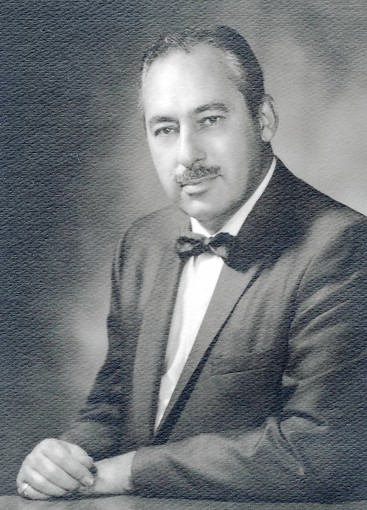
Dr. B. Ralph Hoffman

My last grandparent died this past summer.

My paternal grandfather, B. Ralph “Buddy” Hoffman, was born in 1918 in Newark, New Jersey. He went to Michigan State, where he played football, served in the Army Dental Corps and set up a dental practice in the now-hip Hampden neighborhood in Baltimore in 1949.

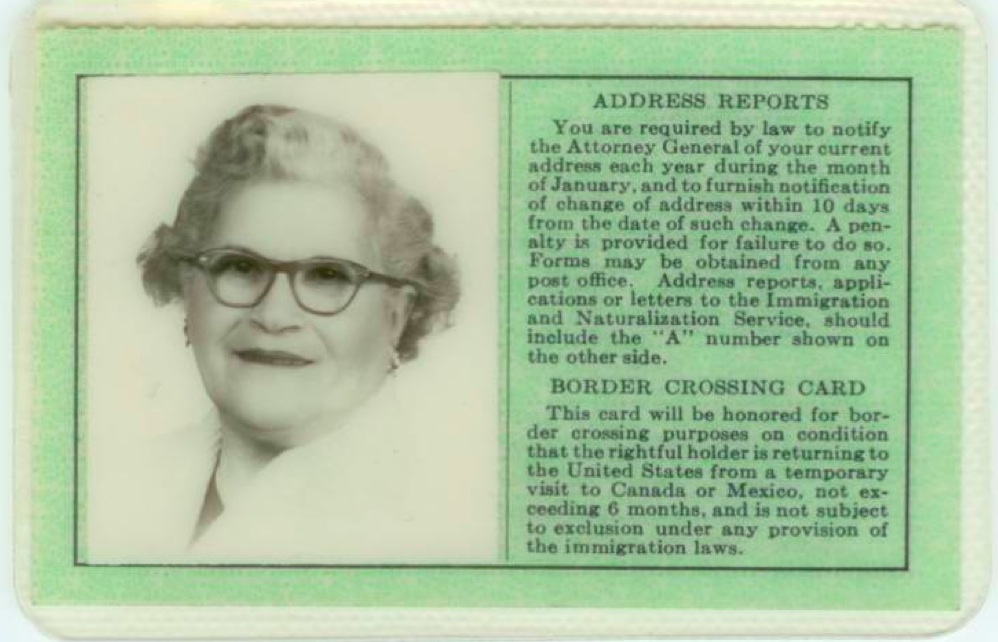
Poppy died in June. Going through some of his stuff, my dad found a green card for Poppy’s mother-in-law (that’s my dad’s maternal grandmother and my great-grandmother).

I never knew my great-grandmother, Rebecca Glick. She died on Thanksgiving Day in 1968, before I was born. But my Poppy, and his wife, Betty, or Gigi, who died in 2000, lived with her when they were getting their start, after Poppy got out of the Army. According to my father, Poppy had a great relationship with Rebecca. She came to live with them later, when they got their own place.

We do not know much about Poppy’s parents as they died when he was young. Gigi’s mom, Rebecca, for whom my sister is named, came to the United States in 1903 at the age of 16. (My mother’s grandmother was also named Rebecca.) She came from Latvia with her husband, William, who died young, after they had six kids together. She called my dad “sonny boy.” They owned a grocery store in Baltimore and my mom claims that Rebecca Glick used to play cards with her grandmother, Rebecca Pollack.

Rebecca does not look much like my Gigi in this picture. Nor does she look 16—I believe the green card is a reissue from 1952, which leads me to believe she never actually became a citizen. I’m trying to imagine her smiling, or me making her smile with some kind of pidgin Yiddish joke or other shenanigans. Her glasses are awesome and she looks like she’s wearing a bathrobe. I wish I could ask her about the Old Country.

People often ask me why I’m writing this book. What’s my interest. Often it’s just a curious question. Sometimes it’s asked in an accusatory way, as in: “What’s at stake for you, Hoffman (you white boy from Idaho)?” Sometimes it’s accusatory from the other side as in: “Why would you want to write about immigrants?”

Well, one reason I’m interested in the fate of immigrants to the U.S. is that my family, through our broadly and liberally defined Jewish culture, has retained some ties to the Old Country, even though we don’t really know much about the places from which our ancestors hailed (Latvia? Ukraine?). Those ties to our immigrant past allow us to be both fully American and at the same time to see the nation with fresh, sometimes oppositional, eyes. Like most late 19th century immigrant families, I can claim both my freedom of speech and assembly and my clean record on slavery, mint juleps and manifest destiny. I am a fourth generation American, taking Rebecca as the first generation, straight off the boat. But I’m no Pilgrim or Son of the American Revolution. Or Tea Partier.

And now I have the green card to prove it.