We had 24 hours of intense conversation and experience of family separation and impending reunion, in several formats this weekend.
Friday night, my wife and I went to see One Way: A Tuareg Journey, a very thoughtful documentary about a Tuareg family from Niger that immigrates to Northern Italy, where the father works at an electronics assembly plant. The father left first, in the hopes of earning some money for his family. A year or two later, he sent for his wife and two older children, who quickly adapt to life in Italy, thriving in Italian and soaking up knowledge and culture.
For about three years, the family is separated from the youngest son, who did not have a birth certificate or some other identity document and was not able to join the family in Italy. (In a particularly compelling scene, the boy takes a piece of scrap paper and fills it with geometric shapes, calling it his papers.) Filmmaker Fabio Caramaschi captured the intense reunion of father and young son in the desert, when the softening, westernizing father returns to collect his Tuareg son, who was left with grandpa to work the camel train and survive in the harsh Saharan climate. The son, al-Kassoum, is a brilliant 6-year-old upon his arrival in Italy, and is able to reflect on the stark cultural differences and opine that he’d rather return to Niger, to the desert.
On Saturday, we went to a birthday party for 1-year-old Sara, whose parents, Veronica and Juan, will appear in Amor and Exile. Sara has never met her father because he is in Mexico and barred from returning to the United States for a long time. Juan called from Mexico while we were at the house and spent a long time on the phone with his brother, his nieces and singing Happy Birthday to his baby. While he was emotional about missing the pink cake and kid games (as was I), Juan and Veronica are planning to reunite in Mexico before year’s end and their excitement was palpable.
Then we rushed home to meet another friend, a man from the Congo who had a kind of life changing experience this past week that is nearly unimaginable to me. I am just going to give the rough outlines here, because I think he is going to be telling his own story soon, but on Friday, Benjamin located his wife and two daughters in Kampala, Uganda after 14 years of searching. They spoke on the phone—well hardly spoke, they mostly cried on the phone, both in a state of shock. Benjamin lived in a refugee camp in Zambia after fleeing the Congo in 1997 and recently resettled in Boise. He had spoken to my wife, who works for a refugee organization here, about being unsure when to admit that he would never see his family again. And then, all of a sudden, some newly resettled Congolese refugees in Ohio got to talking and connected the dots between Benjamin in Idaho and his wife and kids in Uganda and all of a sudden they were on the phone, talking to one another again. Now he is trying to figure out how to meet them, again.
These disparate, yet related stories of family separation—whether through government policy, economics, war or some combination of the three—are all connected in my mind. And they serve as a reminder that the conservative talking point of “Family Values” is perhaps a good starting point, or re-starting point, for a national discussion on migration policy. The stories I have been reporting for the past year and a half all make that point and my discussions this weekend make the same point on a global scale: in a world of globalized culture and markets, the family is still a basic unit that requires some basic protections.
While brushing my 6-year-old’s teeth last night I was careful to avoid the two, extremely loose front chompers. She asked me if kids in the Congo lose their teeth because Benjamin had been quite impressed with the way she pushed them out with her tongue. I choked up a bit explaining that he missed his own daughters’ tooth-losing period. But I am confident that he will soon find a way to reunite with his now-teenage daughters and that Juan will soon get to meet his baby and that Sidi’s family’s one-way trip will not rob them of the essential wisdom of the desert.
The airing of the PBS Frontline documentary Lost in Detention last week is part of a growing awareness across the country of the gravity of the Bush-Obama immigrant detention dragnet.
Frontline: Does President Obama believe that his aggressive policy in immigration and enforcement has been successful?
Cecilia Muñoz: The president has said a number of times, he swore an oath to uphold the law. It’s our responsibility to enforce the laws that we’ve got. Congress gives us resources to enforce the laws that we’ve got. But how we do it matters a lot. He’s talked about that as well.
And later in the interview, Muñoz picks up this same idea.
Muñoz: But at the end of the day, when you have immigration law that’s broken and you have a community of 10 million, 11 million people living and working in the United States illegally, some of these things are going to happen. Even if the law is executed with perfection, there will be parents separated from their children.
They don’t have to like it, but it is a result of having a broken system of laws. And the answer to that problem is reforming the law, making sure that we have an immigration system that works here. You can’t fix the heartbreaking things that happen as a result of immigration enforcement just through enforcement policy. You have to fix that by reforming the law, and that requires the Congress to act, which is why the president has been pushing them so hard.
It’s the same line that unnamed ICE officials have taken on a recent report from the UC-Berkeley Law School condemning Secure Communities for, among other things, possibly arresting some 3,600 American citizens.
ICE officials called the report “misleading and inaccurate,” saying Secure Communities has enhanced public safety and that the report failed to acknowledge ICE’s responsibility to determine who is in the country illegally.
“If there is a question about an individual’s status, ICE conducts appropriate follow-up. If the individual is a U.S. citizen, ICE takes no additional action. In exercising its civil immigration functions, ICE does not detain U.S. citizens,” the agency said in a statement released in response to the report.—Identical quote at San Jose Mercury News and Salon.com
The report in question expands on an American Immigration Lawyers’ Association survey that we wrote about in August. The University of California—Berkeley Warren Institute on Law and Social Policy completed a study of Secure Communities [full report .pdf]. Among the findings:
Approximately 3,600 United States citizens have been arrested by ICE through the Secure Communities program
More than one-third (39%) of individuals arrested through Secure Communities report that they have a U.S. citizen spouse (5%) or child (37%), meaning that approximately 88,000 families with U.S. citizen members have been impacted by Secure Communities
Latinos comprise 93% of individuals arrested through Secure Communities though they only comprise 77% of the undocumented population in the United States
Let me repeat that: based on extrapolations of a smaller data set that the law school obtained through the settlement of a lawsuit between ICE and the National Day Labor Organizing Network, 3,600 U.S. citizens may have been held by ICE since October 2008 and some 88,000 families with U.S. citizen members have been affected by Secure Communities.
“Overall, the findings point to a system in which individuals are pushed through rapidly, without appropriate checks or opportunities to challenge their detention and/or deportation. This conclusion is particularly concerning given that the findings also reveal that people are being apprehended who should never have been placed in immigration custody, and that certain groups are over-represented in our sample population.” —Warren Report
The most chilling line in the report, for me, is that the family connections of detainees to U.S. citizens are likely underestimates: “… as immigrants may fear disclosing personal information to immigration authorities, particularly if they live in mixed-status families and fear negative consequences for family members because many detainees do not want to implicate their families in their immigration cases.”
But it works the other way as well. The 88,000 or more American families caught in this system are often not able or willing to speak out on behalf of their detained relatives because of legal concerns, family complications, lack of access to media, advocacy groups or legal aid and their sheer need to survive while a spouse or parent is held and likely deported. And so we rarely hear their stories. Obama does not hear their stories. Republican presidential candidates do not hear the stories of American citizens detained by ICE or the American spouses of immigrants put in deportation proceeding because of a broken tail light.
That is the collateral damage that Muñoz calls inevitable in our democracy, a mere budget line item, and the cost of doing law enforcement.
A few weeks ago, I sat in the basement studio of Boise’s brand new community radio station discussing #OccupyBoise with eight or nine people who were fired up to cover the movement in some way. The radio station has only been on the air for about six months and we don’t have a local news segment established yet, but two talented and creative volunteer DJs who host mostly music shows wanted to report on the surprisingly robust Boise wing of #Occupy. Part of our discussion was whether or not the guys had been “too involved” in the organizing of the marches and general assemblies in Boise to credibly report on the phenomenon.
I am very reticent to judge who is credible to report on anything these days, as I think journalism ought to be—and is—judged more for the character of its content than for its pedigree. Also, I am just a volunteer at Radio Boise as well, bringing my decade of experience in the mainstream and alternative media to the table to help establish a news department at the station. Furthermore, community radio was doing consensus and direct democracy work before hash tags were even invented, so I was not about to make any decrees about who can report on what. But I did suggest that anyone who wanted to report on #Occupy Boise ought to be very clear on their involvement in it—both to themselves and to the public.
Jose Antonio Vargas defines American
Jose Antonio Vargas, the undocumented reporter who is reporting on immigration through his own new organization, Define American, has done just that, and he comes off as extremely credible. Vargas, borrowing from journalism prof Jay Rosen, calls this style of journalism “The View from Somewhere“—the idea that our experiences and biases and power of ideas make our journalism more interesting and useful. But Vargas, while clearly advocating for justice in his own case and in the case of millions of immigrants stuck in what a large majority of Americans believe is a “broken” system (in whatever way they feel it may be broken), has made the clear distinction that he is a reporter first. He is taking on the role of investigator, critic, chronicler and working in the realm of ideas first and foremost. It is a great feeling of liberation—a graduation of sorts—to move from the he said/she said, transcriptionary, third person, “fair and balanced” approach that young reporters are still taught at newspapers across the country to realizing that the reporter has thoughts and feelings and a mind as well and that his or her thoughts and feelings matter.
I worked as an immigration reporter in the mainstream system for about six years, first at the Idaho Press-Tribune, a small town paper in Idaho’s second largest city, just west of Boise. It was my first real job and the place that I learned how to be a newspaper reporter. And I quickly realized, perhaps because I had moved to Idaho from the East Coast, that there was a large population of Latinos who were excluded from the community in many ways, including in the pages of the newspaper. So I created my own beat: the Latino beat and started writing about farmworker labor issues, offering farmworker perspectives, publishing short A&E (Arts and Entertainment) pieces in Spanish and English on cultural events and music in the Latino community and looking into bilingual education in the schools.
But my first inkling that I was not going to make it as a straight up newspaper reporter came when I witnessed an act of blatant racism at a city event before the annual rodeo—the biggest show in town. The story was supposed to be something like “City Council Excited for 75th Annual Rodeo” or something like that. But I returned to the newsroom with a much better story: “City Councilman Pans Black Rodeo Clown with Fried Chicken and Watermelon Jokes.” The newsroom was not equipped for such a story questioning the town’s most sacred traditions. There was literally no newspaper mechanism to get that information on the front page the next day—I, the reporter, was the only witness who was talking. But to their credit, my editors let me write an op-ed about the experience for the weekend paper, after the rodeo was over, if I recall, and it generated record numbers of letters to the editor, some urging me to go back to where I came from and others thanking me for pointing out the overt yet unspoken racism in the community.
That’s just one example of how the view from somewhere ought to work; the op-ed, or whatever we called it, should have run on the front page the next day.
In Vargas’ call to action for reporters to take a new line on immigration, he refers to the nefarious role that FAIR and the Center for Immigration Studies have played in media coverage of immigration for the last decade or more. The groups, part of the Tanton Network, espouse what I consider to be an anti-immigrant or racist position but masquerade as think tanks or mainstream policy groups and get quoted all the time.
Vargas cites a Republican source:
FAIR, CIS and Numbers USA have “played an outsized role in speaking for conservatives. They’ve had an outsized role in this debate. They’ve framed the debate in their terms and that’s been really unfortunate,” Robert Gittelson, a Republican businessman, told me.
I have quoted them and I knew at the time that it was an intellectually dishonest thing to do, but my editors wanted to know what the antis had to say so I had to make the call. In 2005, I wrote a story for the Contra Costa Times, where I was the Immigration and Demographics reporter, about a woman whose husband was undocumented and had gotten stuck in Mexico after tending to his sick mother. It was a great story and one of the early inspirations for Amor and Exile. But I was forced to add these two lines to the story:
But for advocates of stricter immigration enforcement, having a family is no excuse for breaking the law.
“The illegals need to either get on the path to get their citizenship squared away, or they shouldn’t be here in the first place,” said Rick Oltman, western field director for the Federation for American Immigration Reform.
In those two sentences, my only chance to frame Oltman’s comments were in my definition of his camp: strict enforcement. At least the tone of Oltman’s comment speaks for itself and he is not the focus of the story in any way. Vargas generously refers to the Tanton network groups as the “anti-immigration reform community.”
Despite my discomfort with these mainstream journalistic habits of framing stories in terms of conflict and stripping the pyramid of any personality, they are difficult habits to unlearn. It’s taken me several years as a freelancer and at an alternative weekly to come out of my shell and it’s still hard for me to write lengthy, self-referential blog posts like this one. But I’ll give one more example of how it can be done before getting back to #Occupy.
I went into coverage of the Tea Party phenomenon in 2009 with the same (kind of boring) questions that are being asked of #Occupy today: What’s this all about? And I wrote about it with some degree of personality (snark) at first and then with an all-out opinion formed from spending the time talking to people at many Tea Party rallies in Boise in this post entitled Tea Party Inspired by Racial Fears. My point is that I was neither for nor against the Tea Party or the Tea Partiers. I was acting and writing as an informed observer, staking out an informed position and offering readers a viewpoint that they could make use of. Many of my friends showed up to protest the protestors, but my form of activism has almost always been through the media. I suspect that is the way Jose Antonio Vargas views his activism—an informed observer with a lot to say about immigration in the United States. Though his coverage may well serve to rally the public—as good journalism should—it is journalism first, not preaching or protest.
So my advice to my friends at Radio Boise was this: you can have opinions and stances on #OccupyBoise and present them as news reporting if they are well developed and fair. You can let the marchers and occupiers speak for themselves on the air and call it news reporting. You can do any number of creative audio reports from the rallies and marches and call it news reporting. But you can’t claim to be part of #OccupyBoise and still call it news reporting (even if the movement is leaderless and tries to embrace “99 percent” of America), because that’s called public relations or propaganda and it’s not fair to news consumers and it’s boring.
It remains to be seen if we will break in the news department at Radio Boise with a story on #Occupy, but one thing we all learned is that despite the democratization of the media through the internet, journalism is still hard in two ways: it’s a daily applied ethics debate and it’s damn hard work.
One of the most difficult things about writing my part of Amor and Exile is that I live it every day.
Before I joined this project with Nathaniel, I primarily wrote in my journal about my experience of living with my husband in the U.S. when he was an undocumented immigrant there, or the aftermath of moving with him here to Mexico. For ten years, I wrote in my black covered notebooks, profusely but randomly—when events led me to need to record what was happening. Now that we’re collaborating, even though we don’t have a strict schedule, we have an endpoint in sight. As far as the book is concerned, that requires staying on top of regular writing, toward the eventual finish line of completing our manuscript. As far as my life is concerned, that is a more open-ended proposition.
Currently, I have only two days—Tuesdays and Thursdays—to get in the right frame of mind for writing my chapters. Those are the days that my husband has agreed to stay home with our daughter while I think and type. The precious hours available to me are whittled down by everything else that I do in order to get ready to write. Scan the news online, write in my journal, meditate. Then there’s responsibilities like nursing my daughter, eating, using the bathroom. Or the dreaded procrastination, a.k.a. social media networks. All of this is no big news to anyone who writes. It’s part of the game, and you either figure out a way to deal with it or get a different job. In reality, none of this is really that big of a deal to me either. Modern professionals learn to multi-task and juggle activities.
But one of the things that most gets in the way of my writing for this book is the very relationship I am writing about. Ha, ha. Yes, my relationship with my husband. Hey—I’m not ashamed to say things aren’t always perfectly harmonious. On any given day we are prone to bicker about something, but if that happens on the day I am supposed to write about my life for this book, it poses somewhat of a challenge of objectivity to me.
I know damn well that even though my husband and I have our differences that it doesn’t mean we don’t love each other, or that I shouldn’t write this book. We’re new parents, we’re a bicultural and binational partnership (read: culture gap to bridge), and we’re both severely underemployed. Which is to say we have strains on our moods. Just that sometimes it can be a little distracting to argue right before I’m supposed to perfect, for example, a section of a chapter about how we met. If I were writing a book about the Berries of North America (perhaps my next book topic), I really doubt that whether or not Margo interrupted me 7 times in the preceeding 7 hours would affect my portrayal of the geographic distribution of the cloudberry. So I have to try really hard to almost dissociate myself from my own relationship while writing about my relationship. That can be an exercise in absurdity.
Last month I read a few of the posts by fellow exile bloggers that Nate put up on our blogroll. In reading The Real Housewife of Ciudad Juárez blog by Emily Cruz, I became aware of some nasty comments that had been made about American women who marry foreigners, in response to an article entitled “American-born wives married to U.S. deported or banned spouses band together via online networks,” in which Cruz was quoted. One of the commenters stooped low enough to say that women could love anything, including a ham sandwich. As a response, Cruz responded with a post entitled, “25 Things I Love About My Ham Sandwich,” a sweet homage to her partner.
If I had been personally targeted, I probably would have been fuming. In fact, I might have even cried. But I am not sure if I would have responded in the same way. Don’t get me wrong: in the book I do talk about all the reasons why I fell in love with my husband—if I didn’t, our story wouldn’t be complete. But I feel very uncomfortable about the idea that I need to somehow prove the value of my relationship with my husband, just because he was at one time undocumented. No one, under any circumstances, should be forced to explain why they love their partner. That’s a dehumanizing situation. I’m concerned that if I respond in that way to attackers, I’ll validate their claims.
I’m writing this post because writing as candidly as possible about our story is something I’ve struggled with since deciding to go public with it. I had second thoughts about what some might consider “airing my dirty laundry.” I’ve done battle with the illusion that, in order to qualify as a worthy subject, our relationship ought to be flawless. But I’m realizing the folly in that viewpoint. I want to be as clear as possible about the pressures our relationship has endured over the years as a result of the legal situation he found himself in, and I found myself in by association. It’s not that we had a perfect relationship and illegal immigration destroyed it. It’s that we have a loving marriage with perfectly normal ups and downs, and immigration law as it’s currently written has strained it to a point that is liable to break up any family. Relationships are hard enough to keep together without having to stretch them indefinitely across international borders and pelt them with the callous comments of haters who have no idea what it’s like.
Us at home in Queretaro
Now, if you’ll excuse me, my husband just made lunch, and the tortillas might get cold. And then I’ve got a chapter to get back to.
Almost a year ago, I interviewed Matias Ramos for an article about the impending DREAM Act vote. Since that time, that vote failed and Ramos continued to fight deportation. Last week, he received another stay of his standing deportation order, allowing him to remain in the United States at least through March 2010 and buying him time for the Obama Administration review of low-priority deportations that is currently underway.
Ramos credits the more than 7,000 people who signed a petition on his behalf, as well as the many people who called Immigration and Customs Enforcement asking that he be allowed to stay and continue his work.
“It has a huge positive impact … in as far as I’m able to bring attention to the issue.” Ramos said. “It’s not just me against the government; my removal would have an impact on other people’s lives.”
Many undocumented youth and immigration reform leaders spoke up on Ramos’ behalf, as he is a powerful voice for immigration reform.
But another life that would be seriously impacted by his removal is that of his American girlfriend, Lindsay McCluskey. McCluskey has been with Ramos since before he was detained at the Minneapolis-St. Paul International Airport in Feb. 2010, setting the deportation in motion. Ramos was detained at the airport after attending a historic meeting of undocumented youth in Minneapolis, though he had been public about his status for years. (He was flagged by TSA because of the ID he presented at the airport.)
“There is a whole community of people who feel it’s their self interest to not have him deported,” McCluskey said. “He’s changed me a lot in that regard. I didn’t used to see the struggle of undocumented youth as my struggle at all.”
McCluskey is a fellow activist and recent vice president of the U.S. Student Association. The two met in Aug. 2009 at Trivia Night at a D.C. bar, though Ramos’ reputation proceeded him.
“I knew about Matias before I actually knew him,” McCluskey said.
Of couse, he knew about her as well … they had met a few months prior, but McCluskey had forgotrten about it.
McCluskey separates their relationship into two periods: pre-work permit and post work permit. Ironically, it was only after Ramos was deported that he was given work authorization. There was a financial strain on their relationship at first, because Ramos did not have full-time work. Now that he is legally working as a fellow at the Institute for Policy Studies, they have a nicer apartment and more equitable date nights.
But there are still constant reminders of Ramos’ complicated relationship with the U.S. government. At a recent lunch at a diner with friends, Ramos took a phone call and came back to the table to announce that ICE just called to say he needed to buy a plane ticket to Buenos Aires by October 4. He paused and then delivered the punchline: they didn’t say what year though.
McCluskey also accompanied Ramos to a check-in with ICE on Sept. 13. After the check-in, an agent sent them down the block to another office, telling them only that it was an outfit that ran a program for ICE and that they were expected in a few minutes. When the couple walked into the office they looked around the packed waiting room and saw that everyone was wearing an ankle bracelet. Ramos left with one himself, walking out with his American girlfriend, feeling the shame of having to plug his leg in for three hours a day.
“It was disgusting having it on,” Ramos said. When the batteries run low, the device beeps and then actually says: “charge your battery now.” B.I. Inc., a subsidiary of GEO Group, one of the largest private prison contractors in the country, provides “community based monitoring” for ICE.
Ramos’ attorney mentioned his American girlfriend in appealing the deportation order, to demonstrate that he has strong ties to the United States. The two have discussed marriage; Ramos could likely adjust his status in the U.S. if he married an American because he originally entered at 13 years of age, on the visa waiver program, essentially as a tourist from Argentina. But Ramos also hoped for the Dream Act to pass, conveying him legal status, or to have his case put aside after administrative review. And McCluskey never felt he needed her to get a green card.
“I’ve never felt that it was my job and Matias has never put pressure on me to do anything for his case,” she said. “For him it’s more than about his case. It’s about the relationship of undocumented people to the U.S.”
She means the official, legal relationship. But she could just as well be referring to the relationship between Americans and the undocumented people we encounter every day. Or to her relationship with an undocumented man, which has grown deeper through the stress of the deportation proceedings. Either way, the point is neither is alone—the relationship between America and the undocumented in her midst grows more and more intertwined every day.
As Ramos told me last year, on being public about being undocumented: “First you feel all alone, then you feel like other people have your back.”
As Nathaniel can probably also attest, it’s a juggling act to have two blogs at the same time. I tend to write deeply personal posts, often about motherhood, culture shock, and conservation issues on my personal blog. But when it comes to how my life is affected by the political circumstances we write about in Amor and Exile (that also affects many other couples), these subjects overlap.
This is an excerpt from my most recent post on my blog The Succulent Seer. It’s about me getting Mexican citizenship and celebrating my daughter’s first birthday within a few days of each other:
The possibility of running out of money hasn’t occurred to me for at least 10 years, back when I was struggling to get on my feet as a recent college graduate. But when they turned me away at the SRE doors and I sat down on the bench outside with the baby, after 5 years of underemployment, and contemplating the possibility that my application for citizenship had been for naught, I wondered if heartless bureaucrats would continue to empty my pockets until I failed to even qualify for either a visa OR citizenship—and then how would my husband and I be together? I broke down in tears. So as to not get stuck in the paperless limbo land that my husband lived in the U.S., I decided to go ahead and reapply for the visa at the eleventh hour, on September 15th, the day before Mexican Independence Day. It was the last day I could submit my papers.
We were down in the commercial district making our way to the bank to transfer money to the INM coffers for the right to be here another year with my family when I got a phone call from my contact at SRE. Only that I couldn’t answer because I’d just dropped my cell phone on the ground and I could hear nothing on the other end. I ran outside to get my husband’s cell phone, ran into the grocery store to put credit on the phone, and ran back out to call my contact. “Is Syracuse spelled with a ‘Y’?” he asked. I stammered yes, wondering if this really meant my wait was over.
I’ve included the link to the full post if you want to read it there.
Dr. B. Ralph Hoffman
My last grandparent died this past summer.
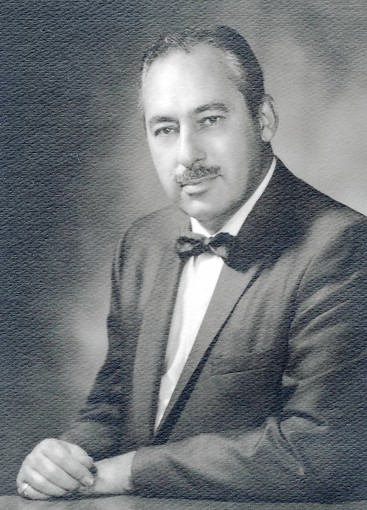
My paternal grandfather, B. Ralph “Buddy” Hoffman, was born in 1918 in Newark, New Jersey. He went to Michigan State, where he played football, served in the Army Dental Corps and set up a dental practice in the now-hip Hampden neighborhood in Baltimore in 1949.
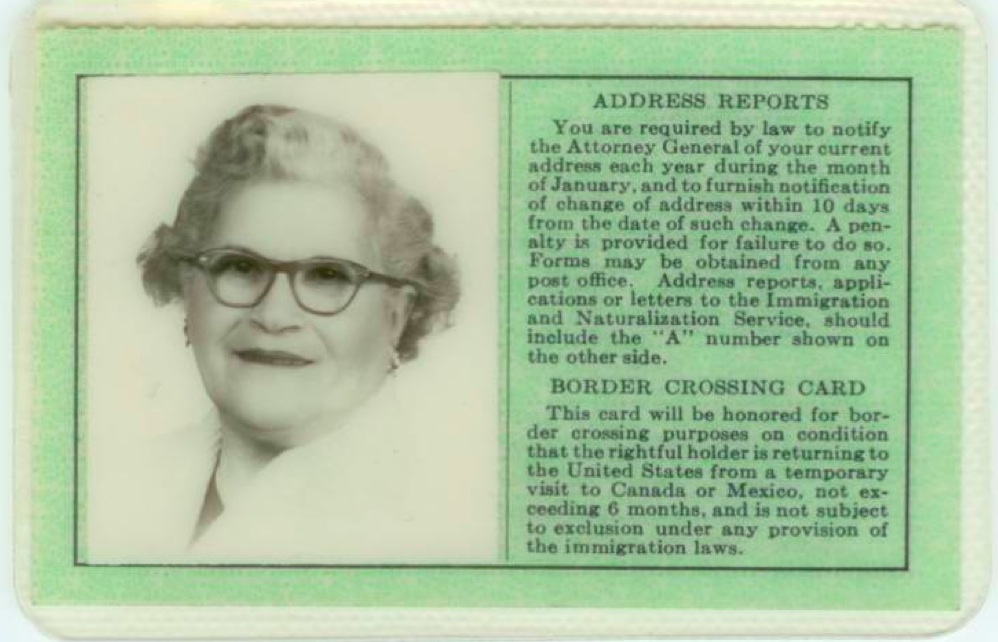
Poppy died in June. Going through some of his stuff, my dad found a green card for Poppy’s mother-in-law (that’s my dad’s maternal grandmother and my great-grandmother).
I never knew my great-grandmother, Rebecca Glick. She died on Thanksgiving Day in 1968, before I was born. But my Poppy, and his wife, Betty, or Gigi, who died in 2000, lived with her when they were getting their start, after Poppy got out of the Army. According to my father, Poppy had a great relationship with Rebecca. She came to live with them later, when they got their own place.
We do not know much about Poppy’s parents as they died when he was young. Gigi’s mom, Rebecca, for whom my sister is named, came to the United States in 1903 at the age of 16. (My mother’s grandmother was also named Rebecca.) She came from Latvia with her husband, William, who died young, after they had six kids together. She called my dad “sonny boy.” They owned a grocery store in Baltimore and my mom claims that Rebecca Glick used to play cards with her grandmother, Rebecca Pollack.
Rebecca does not look much like my Gigi in this picture. Nor does she look 16—I believe the green card is a reissue from 1952, which leads me to believe she never actually became a citizen. I’m trying to imagine her smiling, or me making her smile with some kind of pidgin Yiddish joke or other shenanigans. Her glasses are awesome and she looks like she’s wearing a bathrobe. I wish I could ask her about the Old Country.
People often ask me why I’m writing this book. What’s my interest. Often it’s just a curious question. Sometimes it’s asked in an accusatory way, as in: “What’s at stake for you, Hoffman (you white boy from Idaho)?” Sometimes it’s accusatory from the other side as in: “Why would you want to write about immigrants?”
Well, one reason I’m interested in the fate of immigrants to the U.S. is that my family, through our broadly and liberally defined Jewish culture, has retained some ties to the Old Country, even though we don’t really know much about the places from which our ancestors hailed (Latvia? Ukraine?). Those ties to our immigrant past allow us to be both fully American and at the same time to see the nation with fresh, sometimes oppositional, eyes. Like most late 19th century immigrant families, I can claim both my freedom of speech and assembly and my clean record on slavery, mint juleps and manifest destiny. I am a fourth generation American, taking Rebecca as the first generation, straight off the boat. But I’m no Pilgrim or Son of the American Revolution. Or Tea Partier.
The Exploring Amor and Exile Last Thursday Series, in partnership with Boise City Arts and History Department Artists in Residence Program at 8th Street Marketplace, presents A Slice of Life in Exile at 7:30 p.m. on Thursday August 25, 2011 at the Cole/Marr Coffee and Photography Workshop.
Nicole and Margarito
Amor and Exile coauthor and native New Yorker Nicole Salgado will share a slice of her life in exile in Queretaro, Mexico, where she’s lived for the past 5 years with her husband Margarito and their daughter, who was born last fall. Along with Salgado’s slice of life in exile, you will hear readings from popular blogs by other Americans in exile because of their partners’ immigration woes. Salgado will narrate a photo slideshow, share a recipe from her cookbook, The Bajio’s Bounty, and field Q&A from the audience. Join us!
Event details:
Thursday, August 25, 7:30pm – 9:00pm
The Cole/Marr Photography Workshops
404 S. 8th Street, Lower Level
Boise, ID
FREE (beverages and snacks available for purchase from our lovely hosts)


 On Saturday, we went to a birthday party for 1-year-old Sara, whose parents, Veronica and Juan, will appear in Amor and Exile. Sara has never met her father because he is in Mexico and barred from returning to the United States for a long time. Juan called from Mexico while we were at the house and spent a long time on the phone with his brother, his nieces and singing Happy Birthday to his baby. While he was emotional about missing the pink cake and kid games (as was I), Juan and Veronica are planning to reunite in Mexico before year’s end and their excitement was palpable.